Alaska Train
Solving for Presence
Traditional sightseeing often obscures the raw spirit of the wilderness with unnecessary noise and distraction. There is a need for a scenic travel experience that amplifies environmental presence through quiet, technical precision. The solution must act as a silent frame for the landscape, allowing the traveler to remain fully immersed in the untamed vastness of the North.
Identity
Alaska Train is a high-end rail experience that redefines northern travel through the lens of instrument precision and quiet luxury.
This rebrand discards traditional tourism noise for a minimalist, data-driven identity that mirrors the shifting geometry of the frontier. By balancing technical accuracy with the untamed spirit of the landscape, the brand serves as a sophisticated navigation tool that frames the vastness of the Alaskan wilderness without ever overshadowing it.
Precision: Every touchpoint reflects the accuracy of a high-end navigational instrument.
The Wild: The brand exists to frame, not overshadow, the vastness of the Alaskan wilderness.
Quiet Luxury: A focus on intentionality and depth, favoring desaturated tones and premium finishes over loud, traditional tourism marketing.
Visuals
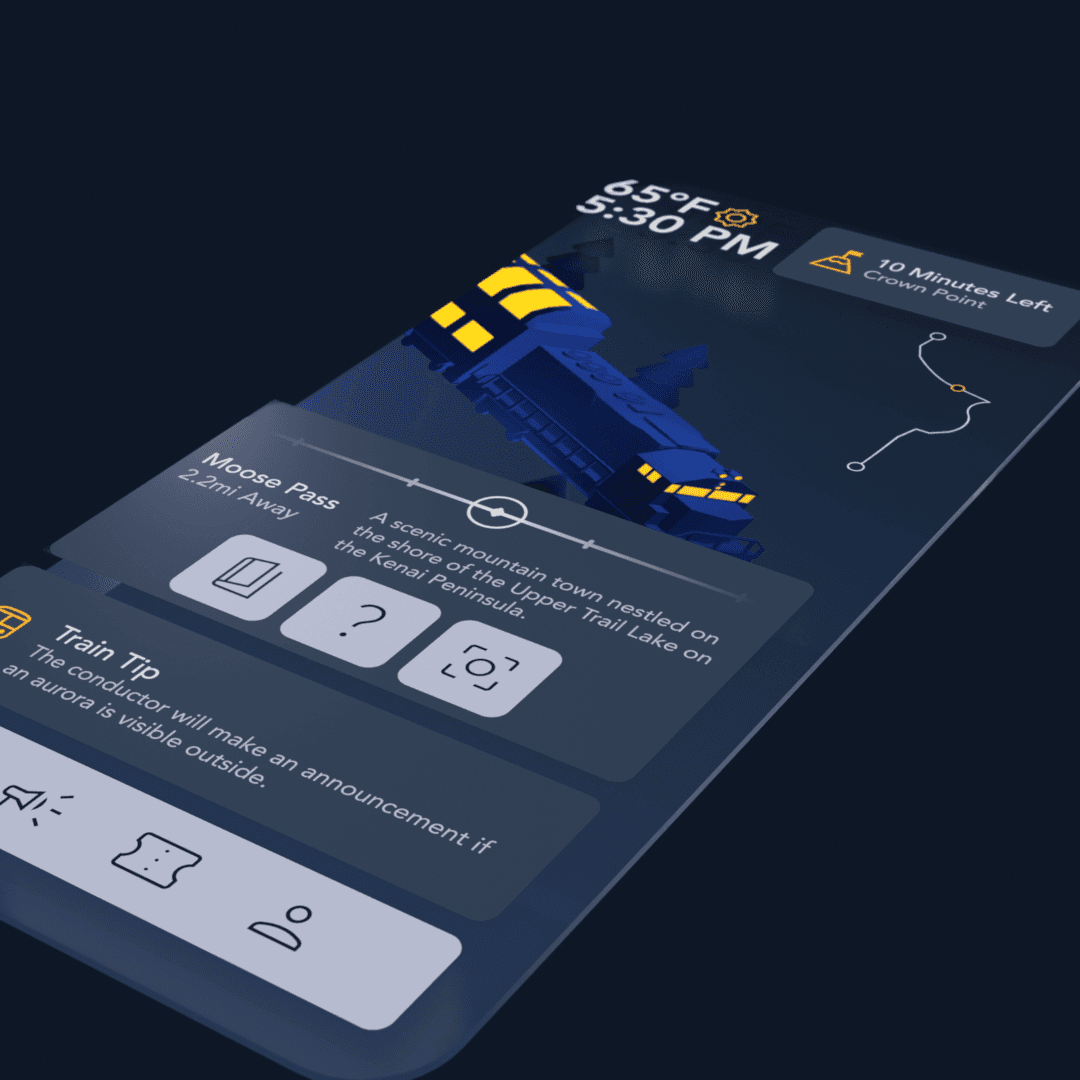
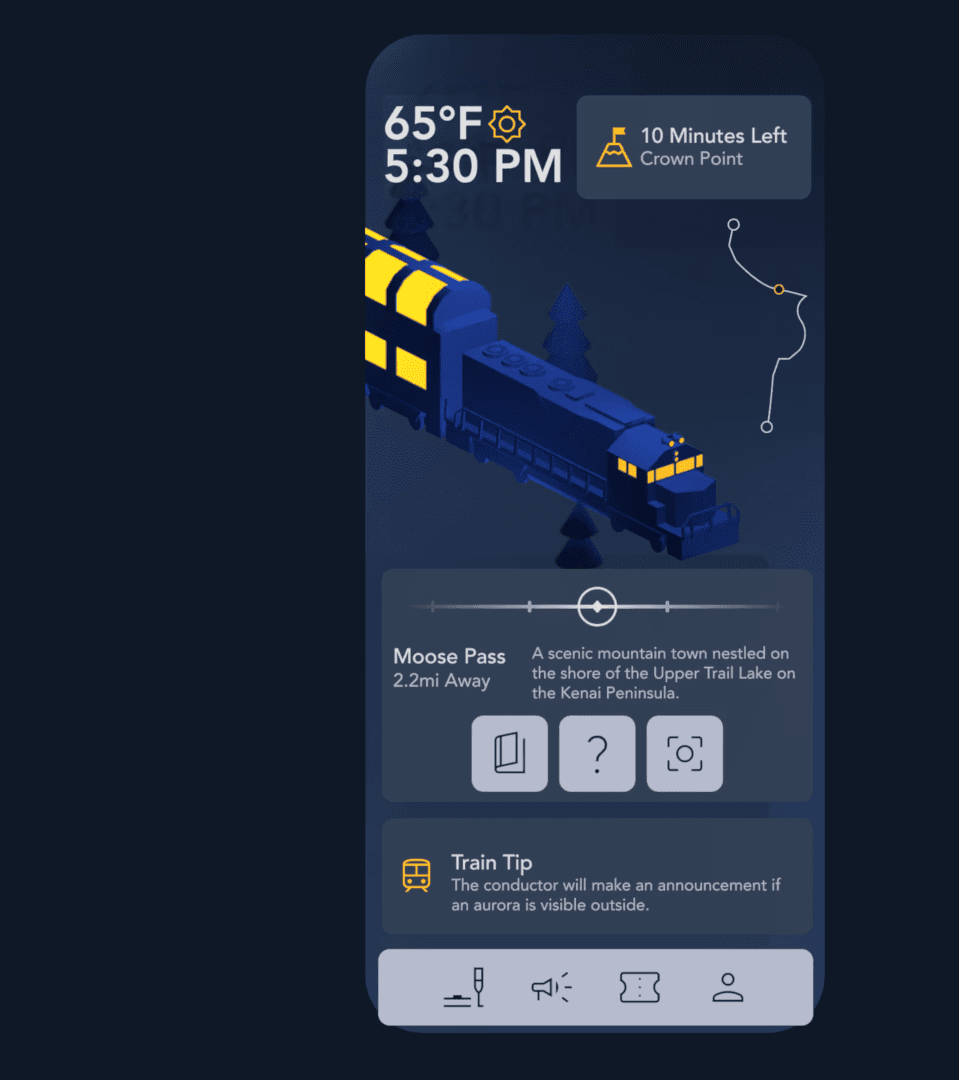
On the Main Dashboard, the user can access standard train amenities, track real-time trip logistics, and quickly access points of interest.
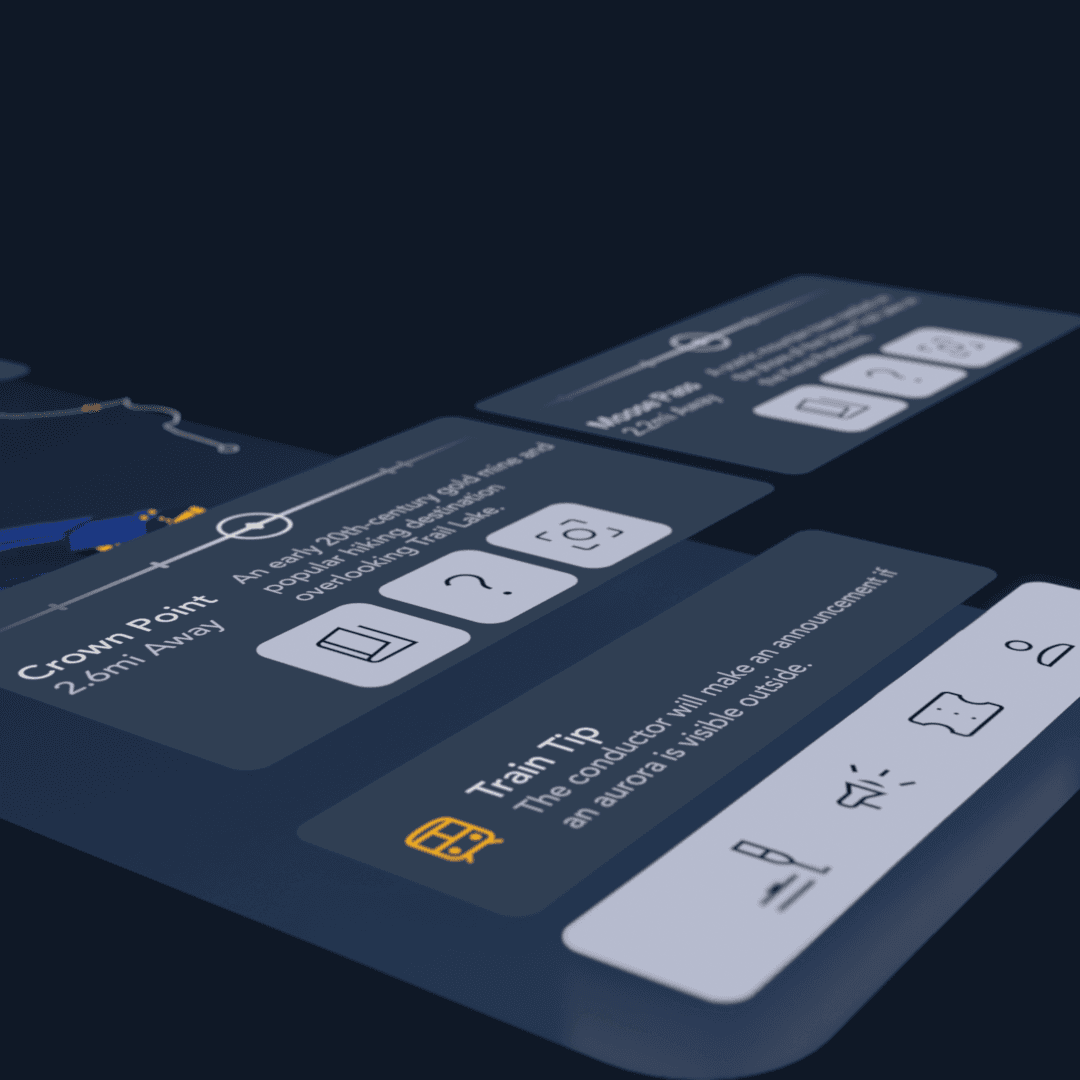
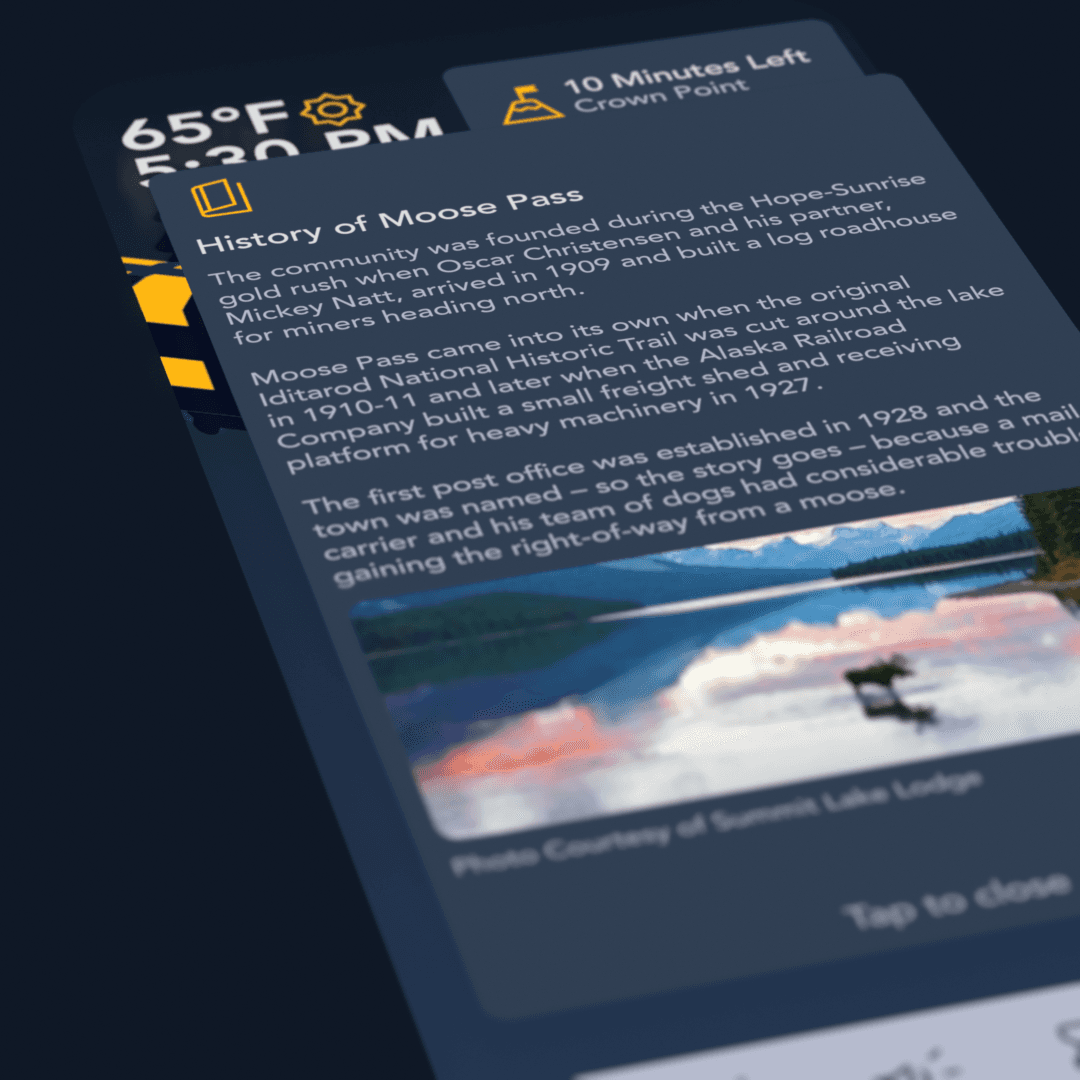
Using the POI selector panel, the user can scroll a geographic timeline to discover specific landmarks and historical waypoints along the rail route.
On the History view, the user can read historical data to gain a deeper understanding of the Alaskan landscape.
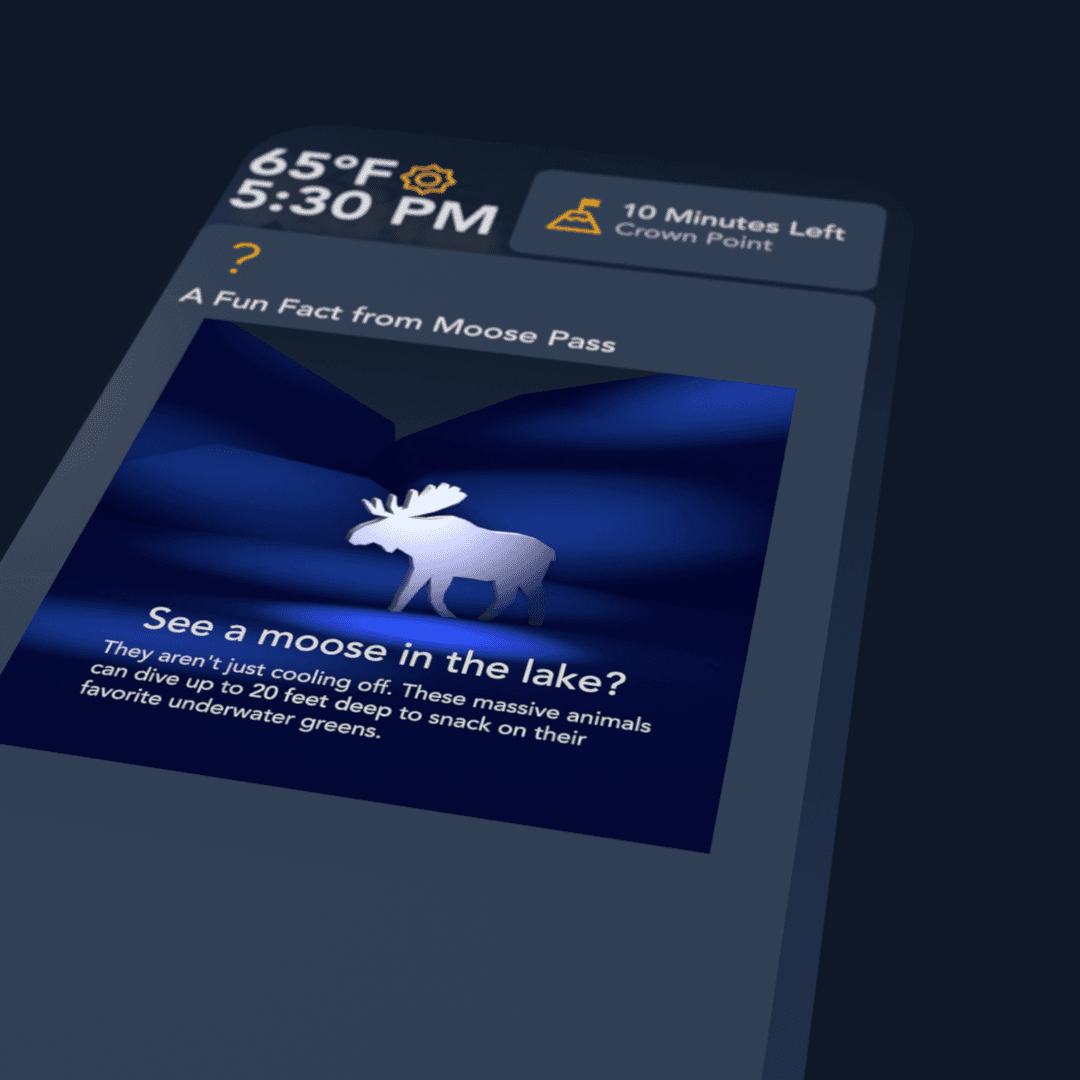
Users can view fun facts for each POI. They can see curated ecological trivia that provides a deeper understanding of regional wildlife and habitat.
On the Augmented Reality view, the user can identify topographical features and geological data in real-time through a geodetic overlay.
Train window footage generated by Google Gemini.
Research
Here I have mapped out the user experience of a scenic train and explored the potential of a companion application’s usage. I identified that a train, being a confined space, would benefit from services that can be remotely accessed from the user’s seat such as statistics, dining, and alerts. The particular path I selected to focus on is how an application can use location, and AR to create engagement with the surrounding environment outside of the train.

92%
of Alaska travelers rank wildlife viewing and scenic sightseeing as their primary reason for visiting.
60%
of the luxury Alaska rail tourism market is ages 55+, this group spends about 5 hours a day on mobile devices.
These insights informed my "quiet" UI style, where accessibility and immersion took priority. By treating the app as a navigation instrument, it emphasizes information retention and environmental focus over the traditional noise associated with touristic experiences.