Borderline Navigation
Solving for Navigation
San Marcos-based artist Ana Treviño came to me with a problem. Her portfolio worked, but its organization lacked clarity and a point of view. The navigation was generic, and gave no sense of who she was as an artist or what tied her work together. She asked me to rethink how people move through the site. The catch was that her site runs on Cargo, a platform I had never used and one with many limitations in place, so the project meant learning it from the ground up and working within its limits.
Process
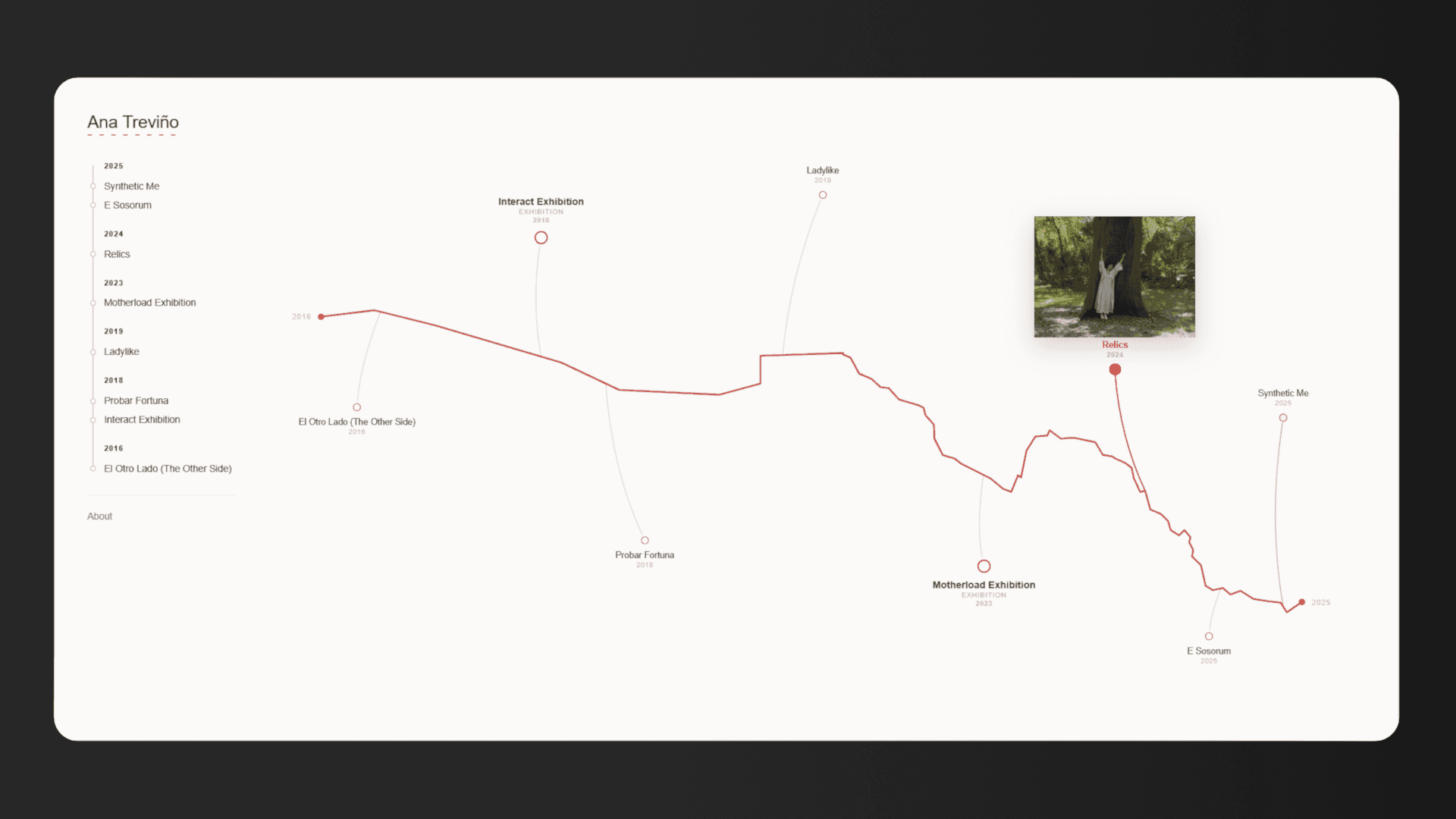
My idea came from Ana's work itself. The US/Mexico border runs through her practice as both subject and metaphor, so I used it as the organizing factor for the site: the border redrawn as a timeline, with each project branching off at the year it was made. The harder part was execution. Ana's site runs on Cargo, so with no native way to build something like this, I used AI to close knowledge gaps quickly and build prototypes of my ideas to see what was working. I used it to understand how Cargo structures its pages, where its limits were, and how to work custom code into the pages. That turned a steep learning curve into something I could move through in just days.
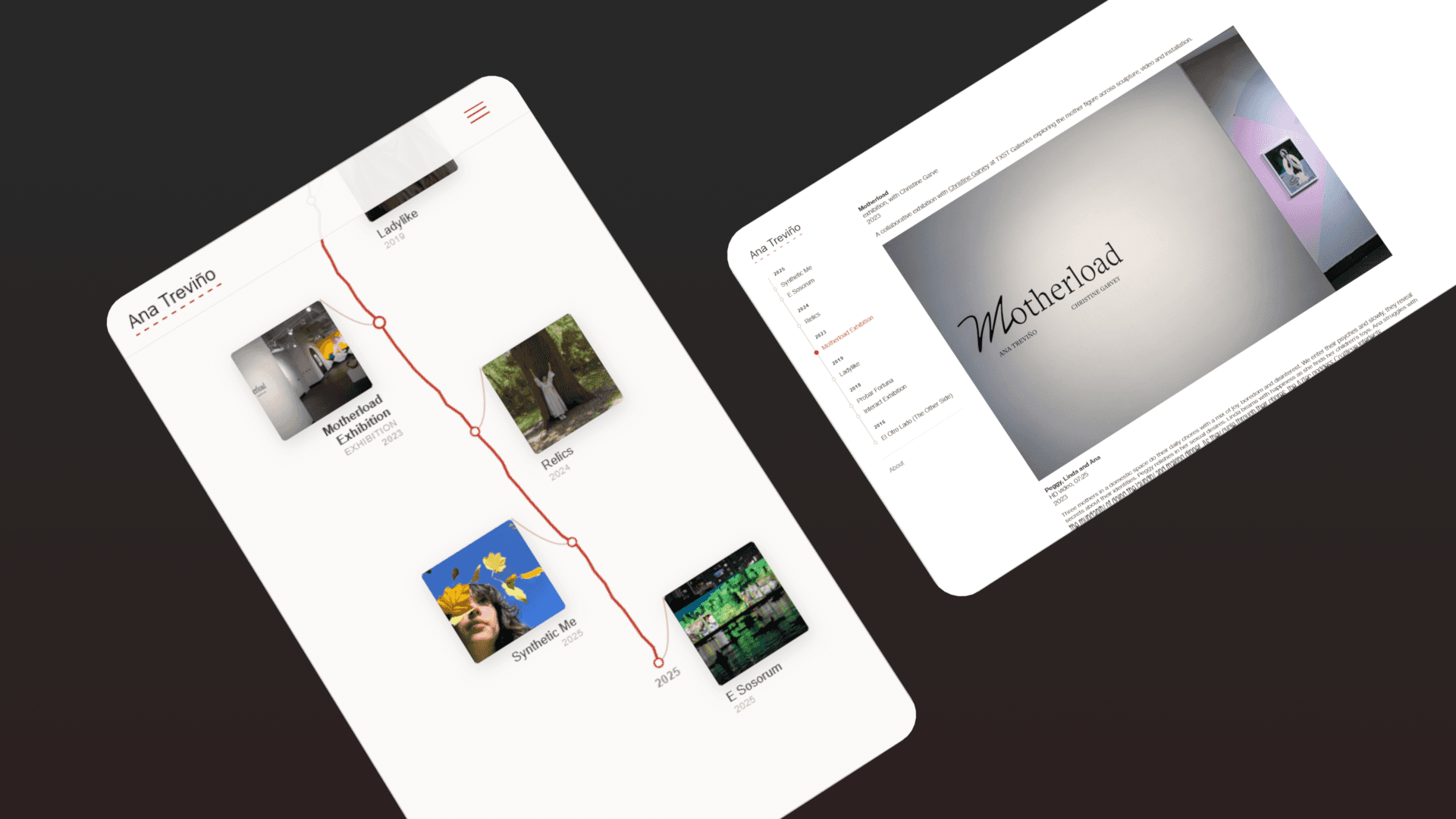
The finished site reframes navigation as part of the work. The timeline reads project page data directly, so it stays in sync as Ana adds or removes pieces using Cargo's standard page system, and it reflows on its own without manual input. Getting it to behave across screen sizes was the main challenge: the horizontal timeline suits a wide display, so for mobile I reoriented the whole concept vertically, with the border running down the screen and projects branching to alternating sides. Both versions share the same underlying logic, so the site holds together as one system. The finished system goes beyond what Ana had asked for, and gives it form that reflects her practice.
© 2026 ISAIAS PEREZ