DesConnect
Solving for Collaboration
Design education often inadvertently fosters isolation between student cohorts. Within a rigorous studio environment, creative development is frequently confined to immediate classmates, creating a landscape where peer-to-peer inspiration and mentorship are limited by the physical boundaries of the classroom. There is an actionable need for a digital environment that bridges these gaps and creates convenient access to feedback. A successful product must dissolve these barriers, transforming individual designers into a unified collective where student work can move beyond studio walls.
Identity
DesConnect is a design research project focused on creating a dedicated digital space "where design minds connect".
Developed to address the communication gaps and cohort fragmentation at Texas State University, the platform serves as a centralized hub for student work-sharing and peer-to-peer critiques. By fostering a culture of active discovery, the project aims to build a more cohesive community that supports professional skill development and collaborative growth.

Team Roles
Isaias Perez: Led design and prototyping for the DesConnect app.
Nathalia Posadas: Led DesConnect branding and research.
Visuals
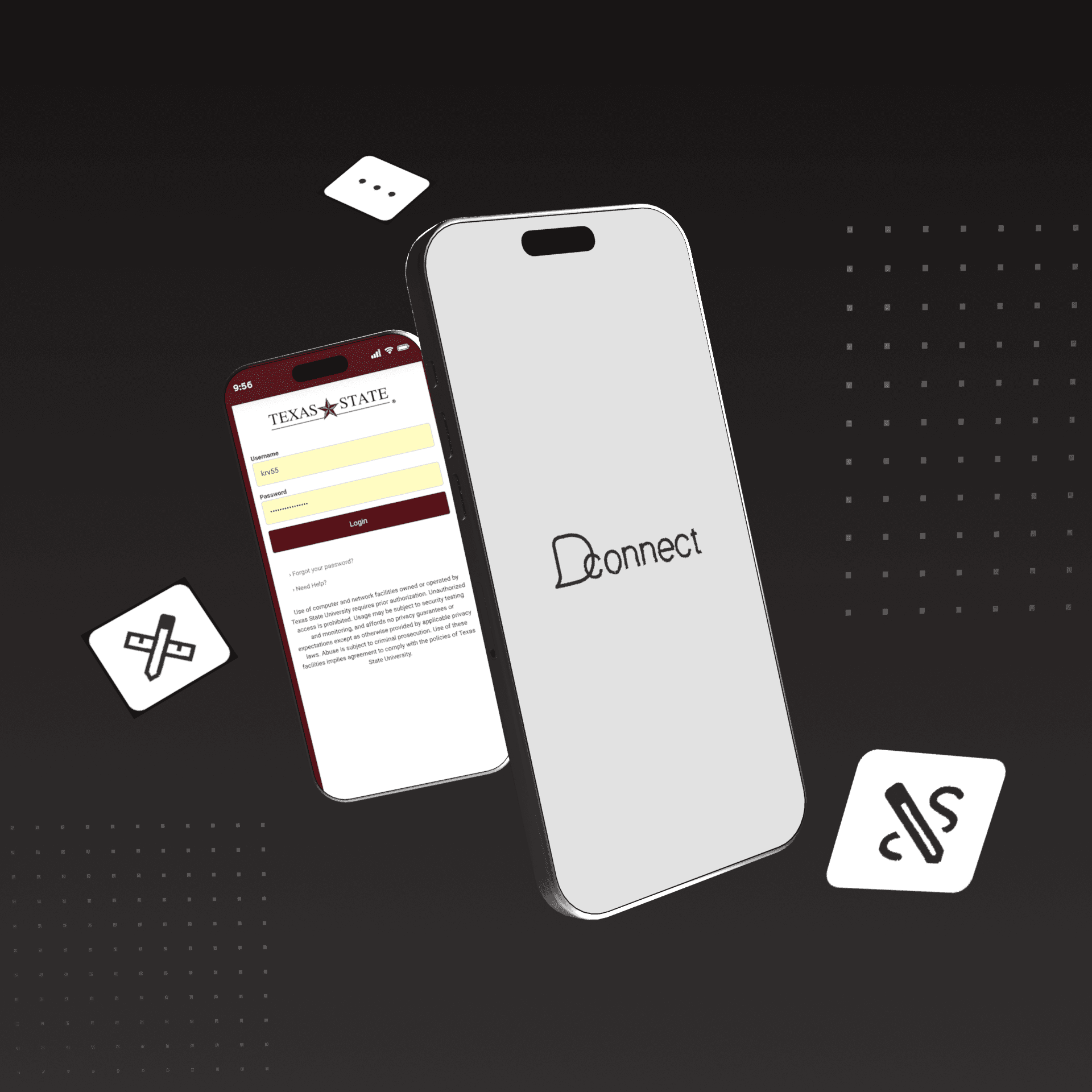
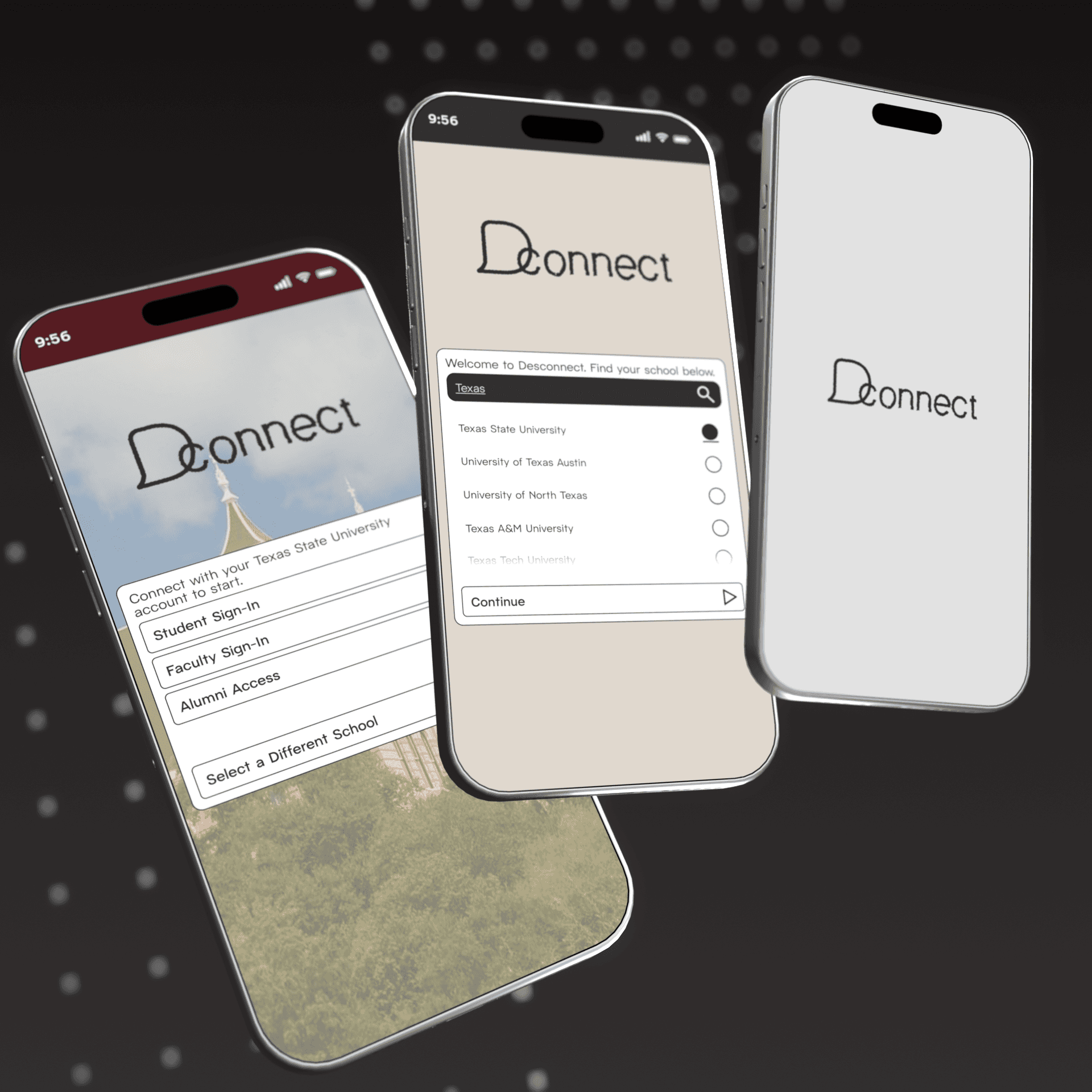
On the Authentication screen, users can log in using university credentials to access their school’s design hub. This maintains a professional and secure space for student-faculty interaction.
On the School Selection screen, users can select their institution to enable a school-specific accent color. This approach allows the platform to be tailored for any design program.

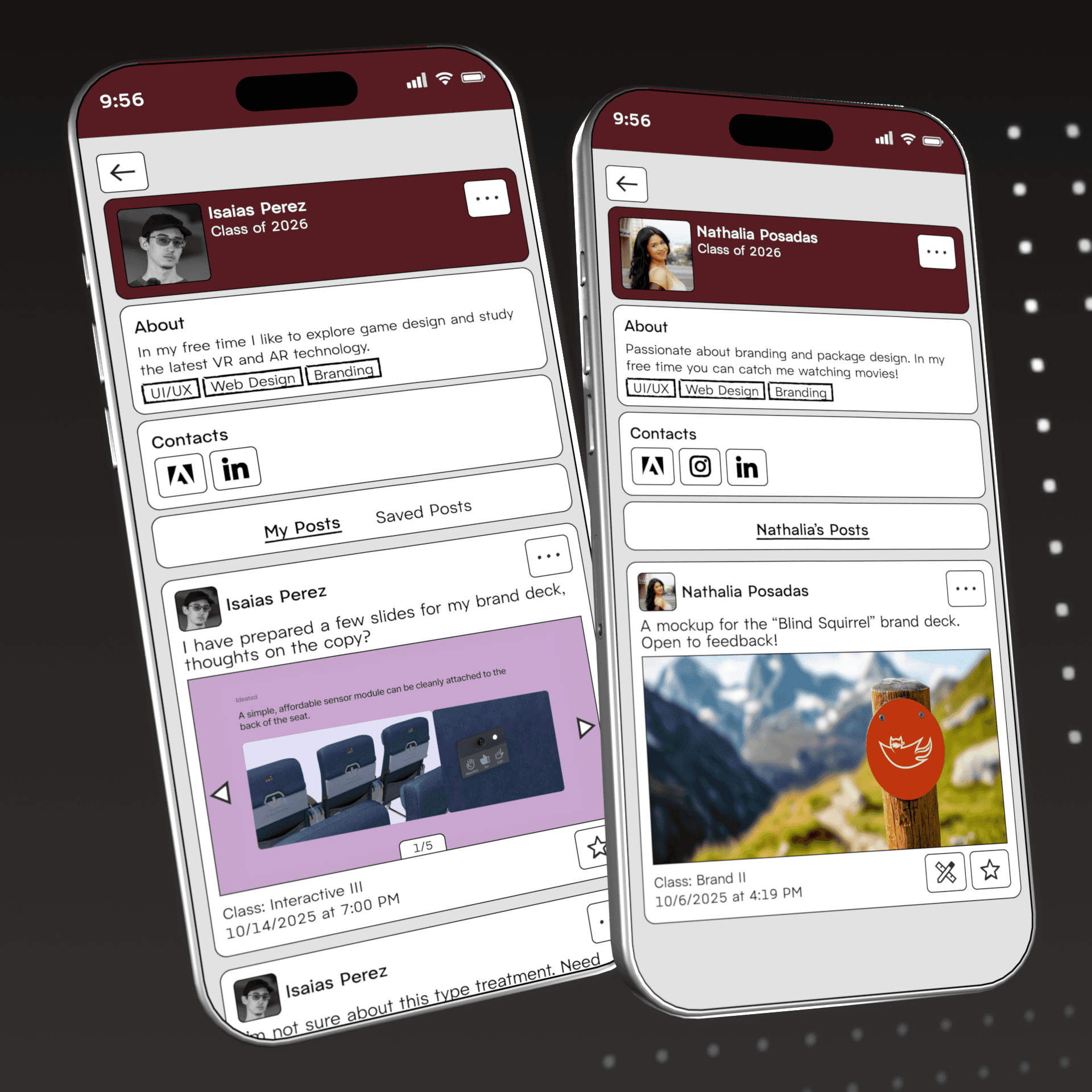
On the Main Feed screen, users can browse work-in-progress projects. Each entry displays the specific course and context to encourage diverse feedback from across the program.
On the User Profile screen, users can view a designer’s bio, professional links, and a history of their shared posts.

On the Feedback screen, users can submit written critiques and include external links or file attachments to enrich their reviews.
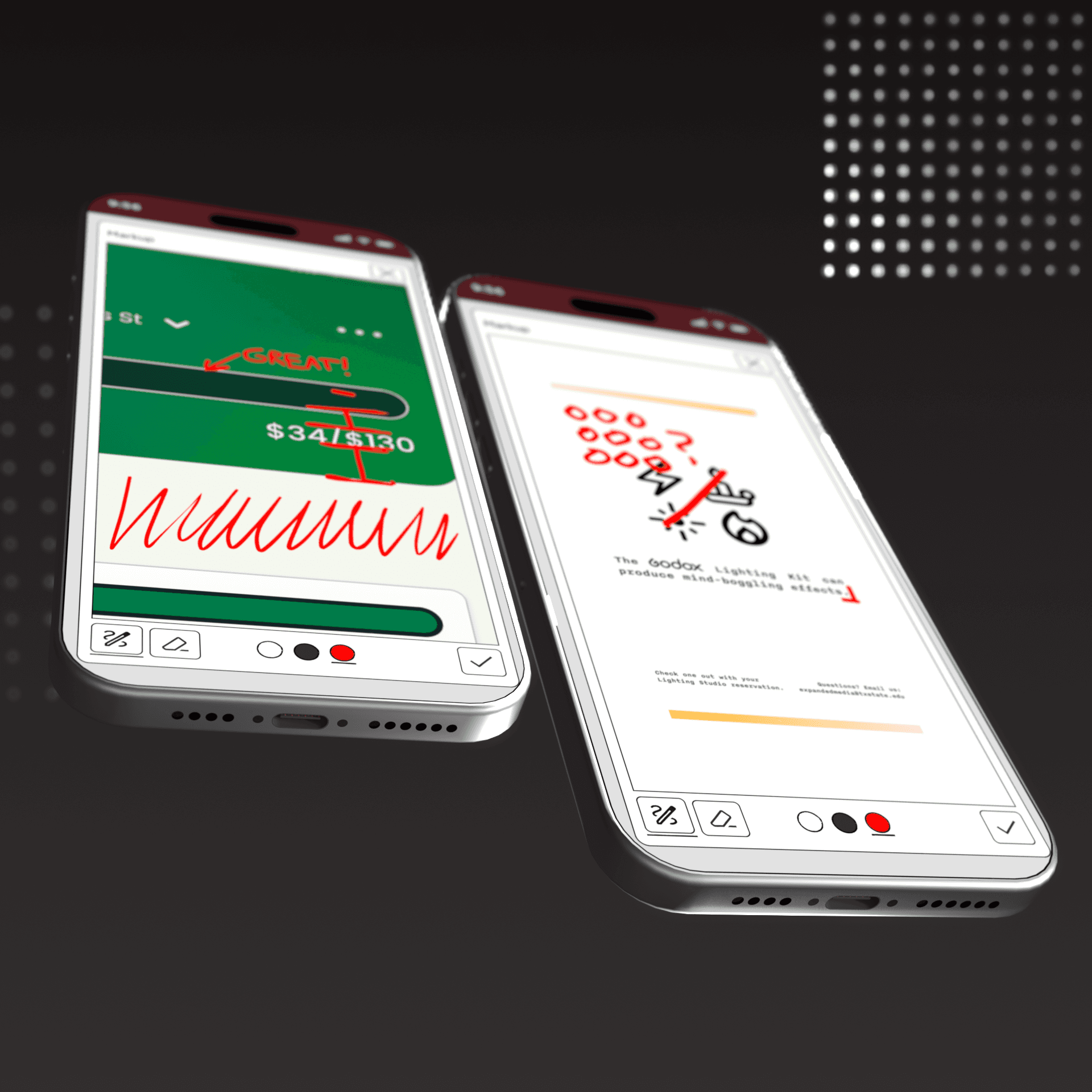
On the Markup screen, users can utilize integrated drawing tools to annotate work. This feature replicates traditional studio feedback, allowing for visual communication during the critique process.

On the Profile screen, in order to respect privacy among the cohort, the user must add another as a Peer before viewing links on their profile page.
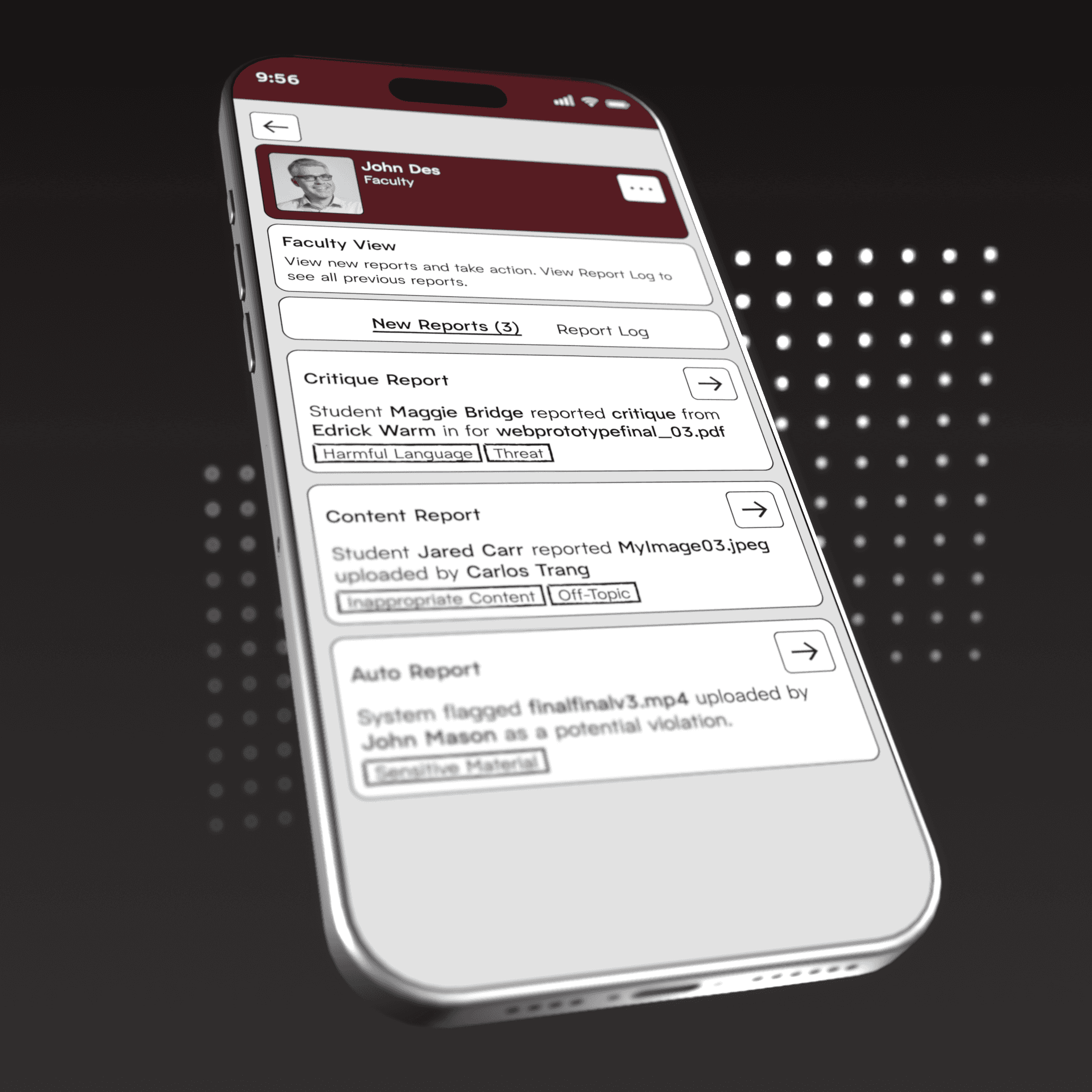
On the Faculty View screen, instructors can oversee community standards by reviewing student-submitted reports and system-flagged content.
Research
We centered our research around this central problem: Communication Design students at Texas State lack a central, dedicated space to showcase their work and connect with peers across cohorts. This absence fragments the community, limiting collaboration, inspiration, and mentorship opportunities within the program.
“Students often only share work with their regular collaborators, I wish we had a way to share and get feedback from new people...”
—Student at Texas State
38%
of students feel somewhat connected to other students outside of their classes.
84%
of students have wanted to collaborate but didn't know how to reach out.
53%
of students don’t know where or have a platform to share their work.
38%
of students ask friends or classmates for feedback on their work.
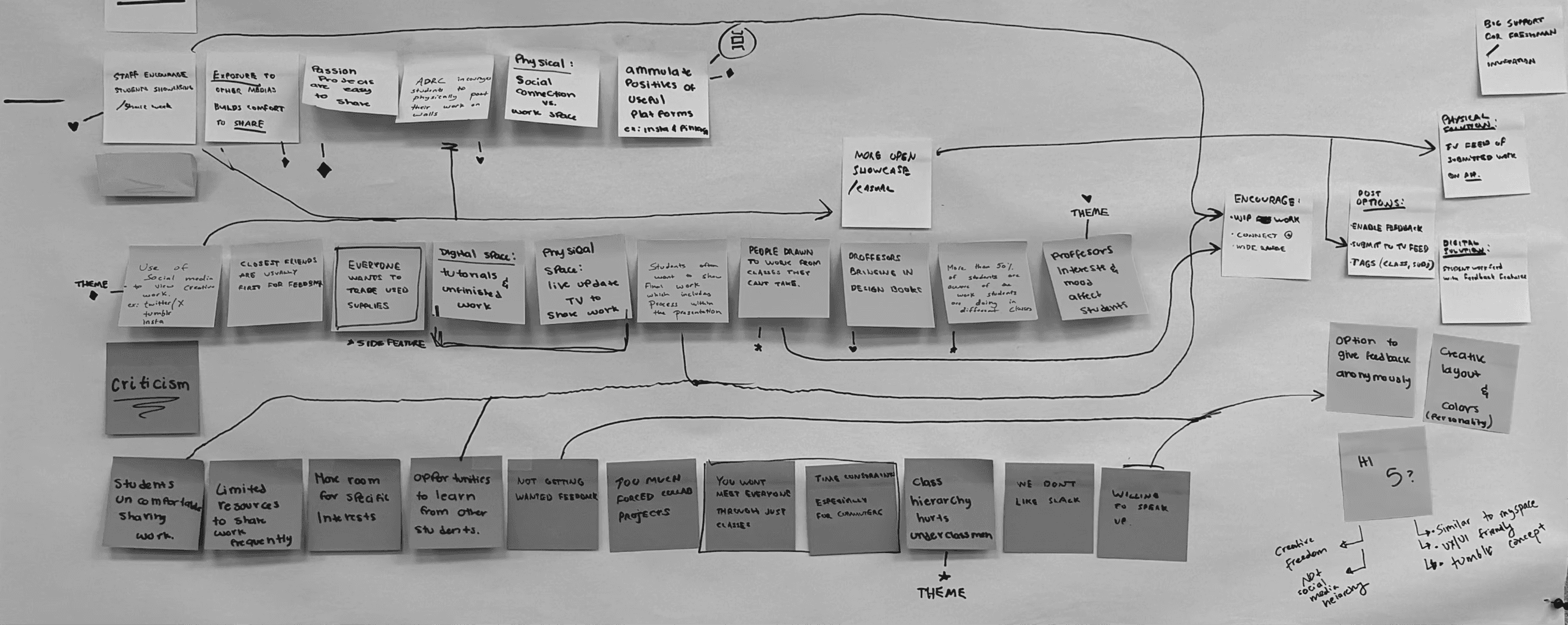
This research directly informed out core features. Here's what we learned.
Class Divide:
Class hierarchy hurts underclassmen.
Students are drawn to see work from classes they aren’t in or can’t take.
Students are uncomfortable sharing WIP work outside of class.
Support Systems:
Most students connect as a result of professors.
Walls like the ADRC encourage students to share/display their work.
In class/process critiques are very valuable for connecting students.
Connections & Sharing Work:
Exposure to other medias builds comfort to share.
Most students lead on closest friends for immediate feedback.
Limited resources to share work results in less opportunities to learn from each other.
© 2026 ISAIAS PEREZ